 Soap Bases
 Scents
 Oils
 Dyes
 Equipment and Accessories
 Cosmetic Clays
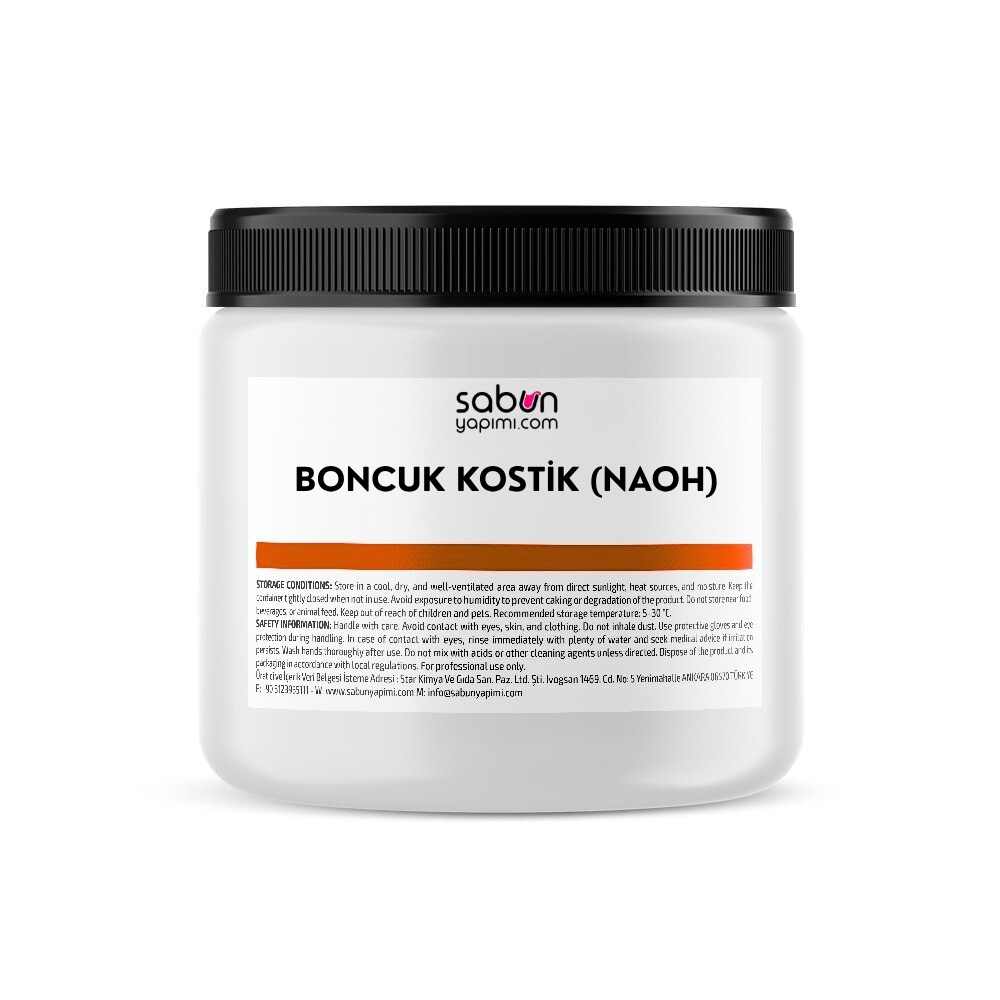
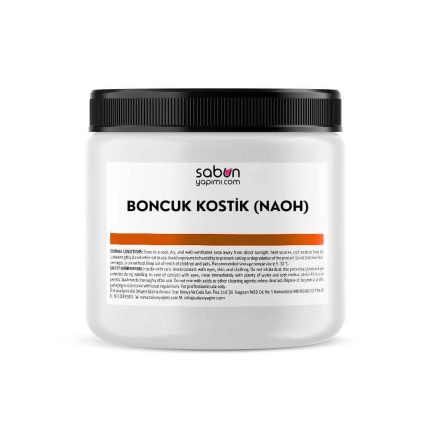
Sodium Hydroxide Pearls (NaOH) 100 g – Caustic Soda for Soap Making
$19,00
Sodium Hydroxide (NaOH), also known as caustic soda or lye, is the strong alkali required for converting fats and oils into solid soap through saponification. Supplied in convenient pearl form for soap making, formulation and laboratory applications.
Sodium Hydroxide Pearls (NaOH) 100 g
Caustic Soda for Cold Process & Hot Process Soap Making
Sodium Hydroxide (NaOH), commonly known as caustic soda or lye, is a strong alkaline raw material widely used in solid soap production, chemical formulation and various industrial processes.
In traditional soap making, sodium hydroxide reacts with fats and oils through a chemical process known as saponification, producing soap and glycerin.
This product is supplied in convenient pearl form and is suitable for correctly calculated cold process and hot process soap formulations.
What Is Sodium Hydroxide?
Sodium Hydroxide is a highly alkaline inorganic compound.
Chemical Name: Sodium Hydroxide
Common Names: Caustic Soda, Lye
Chemical Formula: NaOH
CAS Number: 1310-73-2
Molecular Weight: Approximately 40.00 g/mol
Form: Pearls / Granules
Package Size: 100 g
Sodium hydroxide is highly soluble in water and releases a significant amount of heat during dissolution.
Why Is Sodium Hydroxide Used in Soap Making?
Sodium hydroxide is required to make traditional solid soap from vegetable oils and fats.
During saponification:
- Sodium hydroxide reacts with triglycerides in oils and fats.
- Soap molecules are formed.
- Glycerin is naturally produced as part of the reaction.
Once a properly calculated soap formula has fully saponified and cured, sodium hydroxide should not simply be regarded as an unchanged ingredient added to the final bar; it has been consumed in the chemical reaction according to the formulation.
Suitable for Cold Process Soap Making
Sodium Hydroxide is the primary alkali used in cold process solid soap.
It can be used with oils such as:
- Olive Oil
- Coconut Oil
- Castor Oil
- Sweet Almond Oil
- Avocado Oil
- Hazelnut Oil
- Grapeseed Oil
- Shea Butter
- Cocoa Butter
- Other saponifiable fats and oils
The required NaOH amount depends on the exact oil composition.
Suitable for Hot Process Soap
Sodium Hydroxide is also used in hot process solid soap production.
The chemistry is fundamentally the same as cold process soap making, although heat is applied to accelerate the soap-making process.
The sodium hydroxide requirement must still be calculated accurately.
How Much Sodium Hydroxide Should Be Used?
There is no universal amount of NaOH for every soap recipe.
Each oil has a different saponification value.
The amount required depends on:
- Type of oil
- Weight of each oil
- NaOH purity
- Desired superfat level
- Formula design
Always use a reliable soap calculator or professionally validated formulation.
Never Change an Oil Without Recalculating NaOH
If a soap recipe contains:
- Olive oil
- Coconut oil
- Castor oil
and one of those oils is replaced with another oil, the sodium hydroxide requirement may change.
Never substitute oils gram-for-gram without recalculating the complete formula.
NaOH Purity Is Important
Professional soap calculations should also consider the actual sodium hydroxide purity.
If the supplied product specification confirms:
NaOH Purity: ≥99%
this value should be taken into account where appropriate.
Always use the actual COA or technical specification for the batch supplied.
How to Prepare a Sodium Hydroxide Solution
Important Safety Procedure
Before beginning:
- Wear chemical-resistant gloves.
- Wear chemical splash goggles.
- Work in a well-ventilated area.
- Use a heat-resistant, alkali-compatible container.
- Keep children, pets and unnecessary personnel away.
Measure the exact quantity of water specified in the validated soap recipe.
Then:
Slowly add the sodium hydroxide pearls to the water while stirring carefully.
Always Add NaOH to Water
Never pour water directly onto concentrated sodium hydroxide.
Adding water onto a concentrated mass of NaOH can cause extremely rapid heating, boiling and dangerous splashing.
Sodium Hydroxide Solution Becomes Very Hot
Dissolving NaOH in water is strongly exothermic.
The solution can become extremely hot within seconds.
Therefore:
- Do not hold the container unnecessarily.
- Use a heat-resistant container.
- Do not seal a hot solution in a closed container.
- Allow the solution to cool safely before use.
- Avoid leaning directly over the container.
Use Only Suitable Containers
Suitable materials may include appropriately rated:
- Stainless steel
- Certain heat-resistant plastics
- Other chemically compatible laboratory containers
Never Use Aluminum
Sodium hydroxide reacts with aluminum and can produce hydrogen gas.
Avoid aluminum:
- Containers
- Spoons
- Pots
- Mixing tools
Always verify material compatibility before use.
Adding the Lye Solution to Oils
Once the sodium hydroxide solution and oils have reached the appropriate working conditions specified by the recipe, the solution can be carefully combined with the oils.
The mixture is then blended until a stable emulsion or trace is achieved.
The soap is poured into molds and allowed to saponify.
Cold process soap generally requires additional curing after unmolding and cutting.
Typical Soap Curing Period
Many cold process soaps are cured for approximately:
4–6 weeks
although the appropriate curing period depends on the formulation.
High-olive-oil soaps may benefit from considerably longer curing.
Curing contributes to:
- Water evaporation
- Increased bar hardness
- Improved durability
- More developed lather characteristics
Other Applications
Sodium Hydroxide is also used in professional and industrial applications including:
- Detergent manufacturing
- Cleaning product formulation
- pH adjustment
- Chemical processing
- Textile processing
- Pulp and paper processing
- Water-treatment processes
Industrial use should always follow the relevant process specification, SDS and occupational safety procedures.
Important pH Information
Sodium Hydroxide is a very strong base.
Concentrated NaOH solutions can have extremely high alkalinity and are highly corrosive.
Do not attempt to determine the safety of a soap formulation simply by guessing from its pH.
Professional soap quality requires:
- Correct SAP calculations
- Accurate weighing
- Appropriate NaOH purity correction
- Controlled manufacturing
- Proper curing
- Appropriate quality-control testing
Product Details
Product Name: Sodium Hydroxide Pearls
Chemical Name: Sodium Hydroxide
Chemical Formula: NaOH
CAS Number: 1310-73-2
Form: Pearls / Granules
Weight: 100 g
Purity: Refer to product specification / COA
Solubility: Highly soluble in water
Primary Application: Solid Soap Making / Chemical Formulation
If supported by the batch documentation:
Typical Purity: ≥99%
may be stated.
Hygroscopic Nature
Sodium hydroxide readily absorbs moisture and carbon dioxide from the atmosphere.
Leaving the package open can therefore affect:
- Product weight
- Purity
- Concentration
- Accuracy of soap calculations
Close the package tightly immediately after use.
Storage
Store Sodium Hydroxide:
- In tightly sealed packaging
- In a cool and dry place
- Protected from moisture
- Away from acids
- Away from incompatible metals
- Away from food and beverages
- Out of reach of children and unauthorized persons
The container should be clearly labeled.
Safety Information
DANGER – CORROSIVE ALKALI
Sodium hydroxide can cause severe chemical burns and serious eye damage.
Always:
- Wear chemical-resistant gloves.
- Wear chemical splash goggles.
- Avoid skin contact.
- Avoid eye contact.
- Avoid breathing dust or aerosols.
- Work in a well-ventilated area.
- Add NaOH slowly to water, never water to NaOH.
- Keep away from acids.
- Keep away from incompatible metals such as aluminum.
- Follow the Safety Data Sheet.
In Case of Exposure
Skin Contact
Immediately rinse the affected area with plenty of water and remove contaminated clothing.
Eye Contact
Immediately rinse cautiously with plenty of clean water and seek urgent medical attention.
Inhalation
Move to fresh air and obtain medical advice if symptoms occur.
Ingestion
Do not intentionally induce vomiting. Seek immediate professional medical assistance.
Always follow the instructions in the product SDS and local emergency guidance.
Important Note for Beginner Soap Makers
Sodium Hydroxide is not a beginner ingredient to handle casually.
Before making soap, make sure you understand:
- Accurate weighing
- Lye calculations
- PPE requirements
- Safe lye-solution preparation
- Suitable equipment
- Saponification
- Curing
- Emergency procedures
Never improvise NaOH quantities.
Wholesale, Private Label & Contract Manufacturing
We also supply Sodium Hydroxide and other soap-making raw materials in wholesale quantities for soap makers, workshops, manufacturers, retailers and professional formulators.
Our soap-making raw material range can include vegetable oils, essential oils, fragrances, pigments, additives and other formulation ingredients.
In addition, we provide private label and contract manufacturing services for customized solid soaps, liquid soaps and selected personal-care products.
Custom products can be developed with different oil blends, fragrances, colors, botanical ingredients, shapes, weights, packaging and private label designs.
For wholesale soap-making raw materials, private label soap production or contract manufacturing, please contact us with your required product, formulation, packaging, target market and estimated quantity.